

Belle Mont Mansion
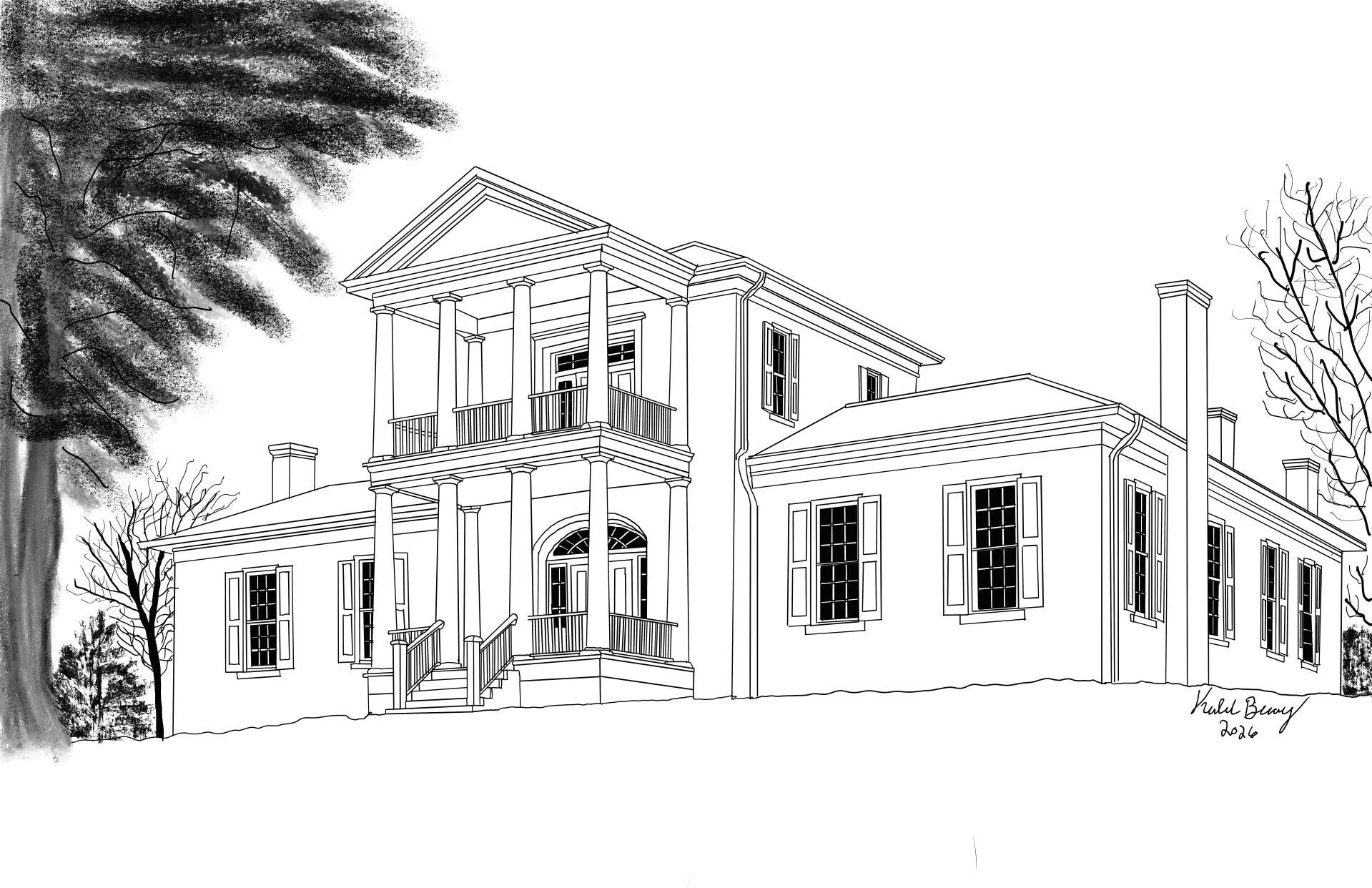
Perched atop a gentle hill just south of Tuscumbia, Belle Mont Mansion stands as one of Alabama's greatest architectural treasures and among the finest examples of Jeffersonian Palladian architecture in the Deep South. Constructed around 1828 for physician, planter, and early community leader Dr. Alexander Williams Mitchell, the mansion reflects the timeless principles of symmetry, proportion, and classical design inspired by the Italian Renaissance architect Andrea Palladio and later championed in America by Thomas Jefferson.
Although the identity of its architect remains unknown, Belle Mont's remarkable design suggests the influence of craftsmen familiar with Jefferson's work at Monticello or the University of Virginia. Its elevated central block, graceful one-story wings, distinctive U-shaped floor plan, and commanding hilltop setting make it unlike nearly any other home in Alabama. Architectural historians consider Belle Mont one of the state's finest surviving examples of early nineteenth-century classical architecture.
In 1833, the estate was purchased by Isaac and Catherine Winston, whose family would own the property for more than a century. During the antebellum period, Belle Mont served as the center of a thriving cotton plantation. Like many plantations throughout the South, its prosperity depended upon the labor of enslaved African Americans whose lives and contributions remain an essential part of the site's history. Preserving Belle Mont today provides an opportunity to tell both the story of extraordinary architectural achievement and the more complete history of those who lived and labored on the property.
After generations of private ownership, Belle Mont faced deterioration before being donated to the Alabama Historical Commission in 1983. Through extensive restoration efforts, the mansion has been carefully preserved as a historic house museum, allowing visitors to experience one of Alabama's most significant landmarks. Today, Belle Mont continues to overlook the Tennessee Valley much as it did nearly two centuries ago—a lasting symbol of the region's architectural heritage, craftsmanship, and complex history.