

Saunders-Goode-Hall mansion
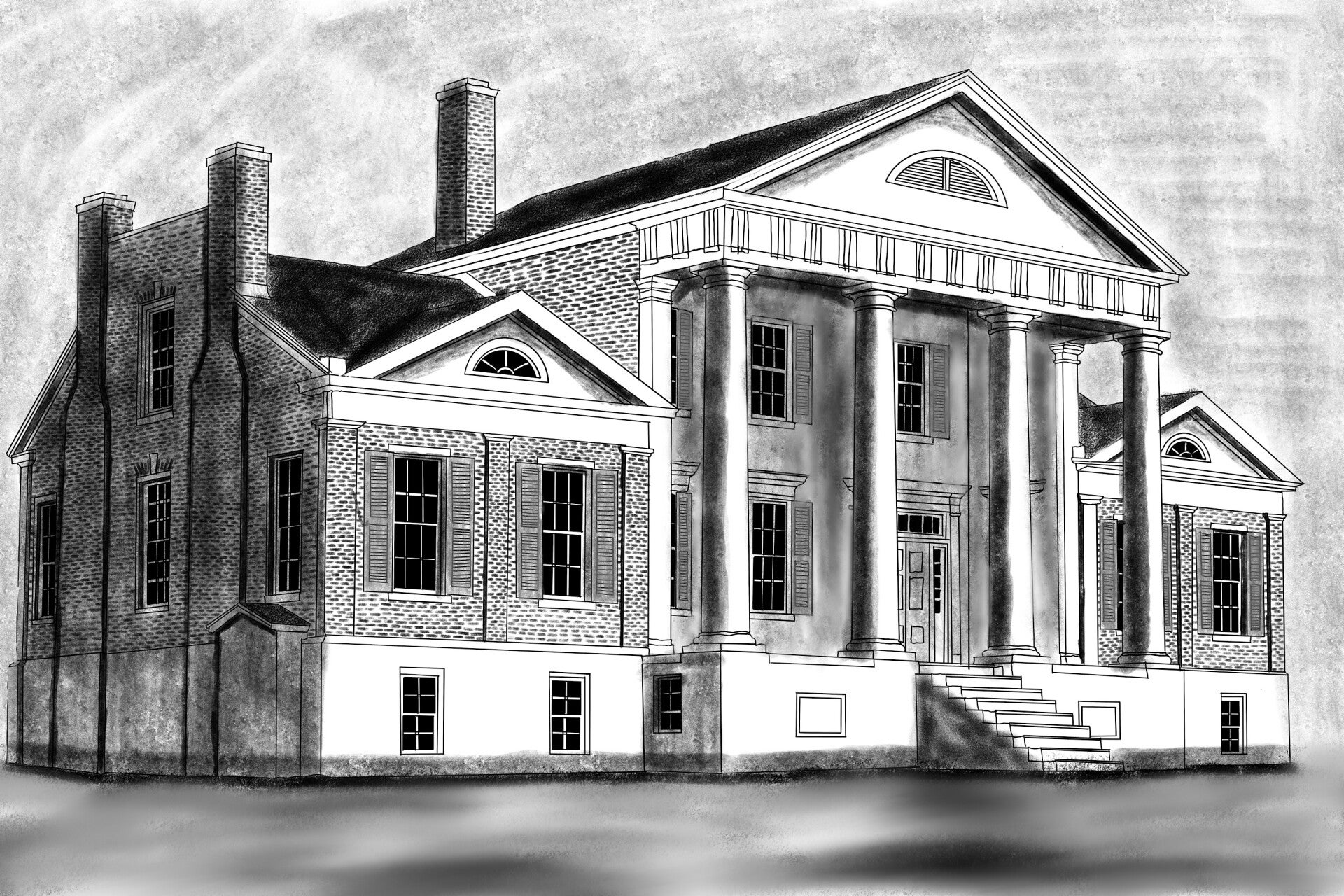
Standing quietly among the rolling fields of Lawrence County, Saunders-Goode Hall is one of Alabama's oldest and most architecturally significant plantation homes. Constructed in 1824 by Reverend Turner Saunders, a Methodist minister and Virginia native, the home reflects the influence of Jeffersonian and Palladian architecture, styles rarely found with such sophistication on Alabama's early frontier.
Unlike many grand Southern homes built later in the nineteenth century, Saunders-Goode Hall belongs to Alabama's earliest generation of permanent masonry residences. Its distinctive H-shaped floor plan, symmetrical brick construction, and refined classical proportions demonstrate the ambition of a state that had only recently achieved statehood in 1819. Historians consider it one of the finest surviving examples of early nineteenth-century domestic architecture in the Tennessee Valley.
After Reverend Saunders relocated to Mississippi, the property was sold in 1844 to Colonel Freeman Goode, whose family name became permanently associated with the estate. Ownership later passed to the Hall family, giving rise to the name by which the home is known today. Throughout its nearly two-century history, the house has remained a recognizable landmark overlooking the fertile farmland that once defined the region's economy.
Saunders-Goode Hall also stands as a reminder of the complex history of the American South. Like many large estates of its era, the plantation operated within the institution of slavery, and its story cannot be separated from the lives and labor of the enslaved people who helped build and sustain it. Preserving the house allows future generations to better understand both the remarkable craftsmanship of the period and the full history of those who lived and worked there.
Recognizing its exceptional architectural importance, Saunders-Goode Hall was documented by the Historic American Buildings Survey and added to the National Register of Historic Places in 1974. Although time has weathered its walls, the house remains one of Alabama's most recognizable historic homes—a powerful symbol of the state's earliest architectural heritage and a lasting connection to the people and stories that shaped the Tennessee Valley.